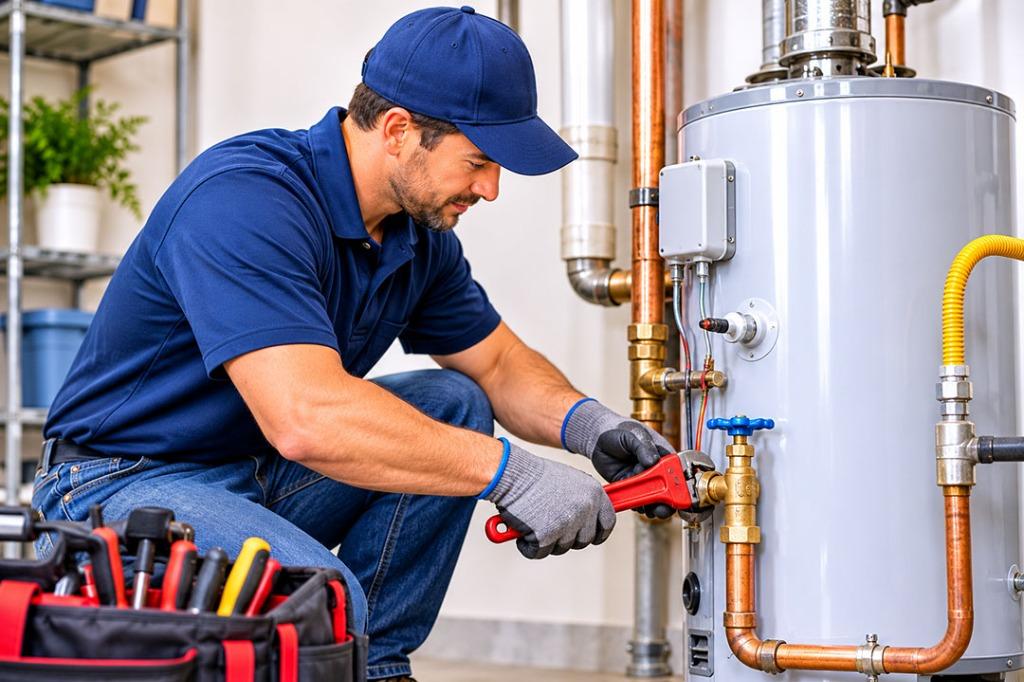
Why Is My Water Heater Making Popping & Rumbling Noises?
You are sitting quietly in your living room in [Arvada](/service-areas/arvada/) or [Westminster](/service-areas/westminster/) when you hear a strange sound emanating from the basement: a rhythmic popping, cracking, or deep rumble that sounds like popcorn popping or stones tumbling in a cement mixer.
While strange noises from household appliances are always disconcerting, popping noises from a water heater are exceptionally common along the Colorado Front Range. Fortunately, they are rarely an indicator of an imminent explosion, but they are a definitive warning sign that your water heater is suffering from **severe sediment calcification**.
In this article, we explain the physics behind noisy water heaters, what happens inside the tank when sediment builds up, and the exact steps needed to quiet your system and prevent a premature leak.
The Physics of the "Popping" Noise: Kettle Boiling
To understand why your water heater sounds like a boiling kettle, you have to look at what happens at the bottom of the tank:
- **Mineral Precipitation**: Denver metro municipal water carries dissolved minerals, primarily calcium carbonate and magnesium. As water heats inside your tank, these minerals precipitate out of solution and sink to the bottom.
- **Sediment Crust Formation**: Over 2 to 5 years without maintenance, loose sandy sediment solidifies into a dense, rock-hard layer of scale lining the bottom curved head of the tank.
- **Steam Trapping**: In a gas water heater, the main burner fires directly underneath this steel bottom. Water seeps into microscopic fissures beneath the rock-like sediment layer.
- **The Steam Pop**: Trapped beneath the sediment blanket, this water quickly reaches its boiling point ($212^circ ext{F}$). As it turns into steam, it expands rapidly by over 1,600 times its liquid volume. The steam bubble violently bursts through the sediment layer into the cooler water above, collapsing with an audible **"pop"** or sharp metallic **"crack."**
When dozens of steam pockets burst simultaneously during a high-fire heating cycle, it sounds like a continuous, muffled rumble.
Why Sediment Buildup Destroys Water Heaters
Many homeowners ignore popping noises for years because the unit still produces hot water. However, unaddressed sediment causes three progressive types of damage:
1. Thermal Insulation and Overheating Steel is designed to transfer burner heat directly into water. Because sediment is an outstanding thermal insulator, the heat cannot escape into the water. The burner continues firing at full power, causing the bottom steel head of the tank to overheat to temperatures well beyond its design parameters.
2. Glass Lining Fractures Water heater tanks are made of steel lined with a thin interior layer of vitreous porcelain glass to prevent corrosion. Extreme localized heat cycles cause the steel to expand and contract at a different rate than the brittle glass lining. The glass lining fractures and flakes off, exposing bare steel directly to water. Within months, internal rust creates pinhole leaks through the tank seams.
3. Lower Element Burnout on Electric Heaters On electric water heaters in [Lakewood](/service-areas/lakewood/) or [Thornton](/service-areas/thornton/), the lower heating element becomes completely submerged in dense sediment. Without flowing water to absorb its heat, the element burns itself out in a matter of weeks.
Can You Simply Flush the Sediment Away?
The solution depends on how long the sediment has been allowed to accumulate:
If the Heater is Under 6 Years Old: Regular Flush If your water heater has been flushed regularly or is relatively young, a professional [Water Heater Flushing](/water-heater-flushing-denver/) can flush out loose lime sand and calcium pebbles through the drain valve using pressurized rinsing tools.
If the Heater is 10+ Years Old and Never Flushed: Caution Required If your water heater is over a decade old and has never been flushed, hardened sediment may be the only barrier plugging microscopic corrosion pits. In some instances, aggressively disturbing a massive sediment bed can trigger sudden leaks in deeply corroded tank walls. A licensed plumber will inspect the exterior base of the unit, check the age, and recommend whether flushing is safe or if a planned [Water Heater Replacement](/water-heater-replacement-denver/) is the wiser path.
Other Water Heater Noises and What They Mean
| Noise | Likely Cause | Severity |
|---|---|---|
| Popping / Crackling | Steam bubbles bursting through calcium sediment | Moderate – Schedule a flush |
| High-Pitched Squealing | Water forcing through a partially closed shutoff valve | Low – Adjust brass ball valve |
| Hissing or Sizzling | Water droplets leaking directly onto the hot burner | High – Indicates active tank leak |
| Deep Metallic Clanging | Thermal expansion pipe movement against wall studs | Low – Install expansion cushions |
| Ticking / Clicking | Heat trap nipples vibrating in pipe fittings | Low – Normal operation |
How to Prevent Noisy Water Heaters
- **Schedule Annual Maintenance**: Have a licensed plumber flush your water heater once every 12 months.
- **Upgrade the Drain Valve**: Replace cheap, narrow factory plastic drain valves with a 3/4-inch full-port brass drain valve that allows large calcium pebbles to pass freely.
- **Inspect the Anode Rod**: Replace sacrificial magnesium anode rods every 3 to 4 years to prevent tank pitting.
- **Consider a Scale Filter or Water Softener**: If your neighborhood in [Littleton](/service-areas/littleton/) or [Highlands Ranch](/service-areas/highlands-ranch/) has elevated mineral hardness, a whole-home softening system protects all fixtures.
Step-by-Step Emergency Flushing Procedure for Denver Homeowners
If your water heater has begun rumbling but you need to stabilize the system before a plumber arrives, you can perform a mini-flush to relieve bottom sediment pressure:
- **Power Down the Appliance**: For gas heaters, switch the thermostat knob to "PILOT" or "OFF". For electric heaters, switch the dedicated double-pole 30A circuit breaker to "OFF" in your electrical panel. Never attempt to drain or flush an energized electric water heater, as dry-firing will vaporize the heating elements in seconds.
- **Attach a High-Temperature Garden Hose**: Connect a heavy-duty rubber garden hose to the bottom drain valve. Direct the opposite end to a nearby basement floor drain, utility sink, or into a five-gallon bucket.
- **Open the Drain Valve**: Using a flathead screwdriver or channel locks, open the drain valve counterclockwise.
- **Leave the Cold Water Supply ON**: Keeping the top cold water inlet valve open keeps the tank under 50 PSI municipal pressure, using incoming water jets to stir up and blast loose sediment through the drain hose.
- **Inspect the Discharge**: Run the water until it flows clear. If chunks of white calcium rock or rust flakes clog the hose, close the valve and call a professional plumber equipped with a commercial pump.
- **Close and Re-energize**: Disconnect the hose, ensure the tank is 100% full of water by verifying continuous flow from an upstairs hot faucet, and relight the gas burner or flip the electric breaker back on.
When Rumbling Means the Tank Is Too Far Gone
It is critical to recognize when sediment damage has transitioned from a maintenance issue into an unavoidable replacement scenario. If you observe water droplets sizzling on the main gas burner or see moisture seeping through the bottom insulation ring, internal thermal fatigue has already compromised the steel cylinder. In this situation, further flushing is useless. Contact our Denver emergency team at **(456) 789-0123** to coordinate immediate same-day replacement.
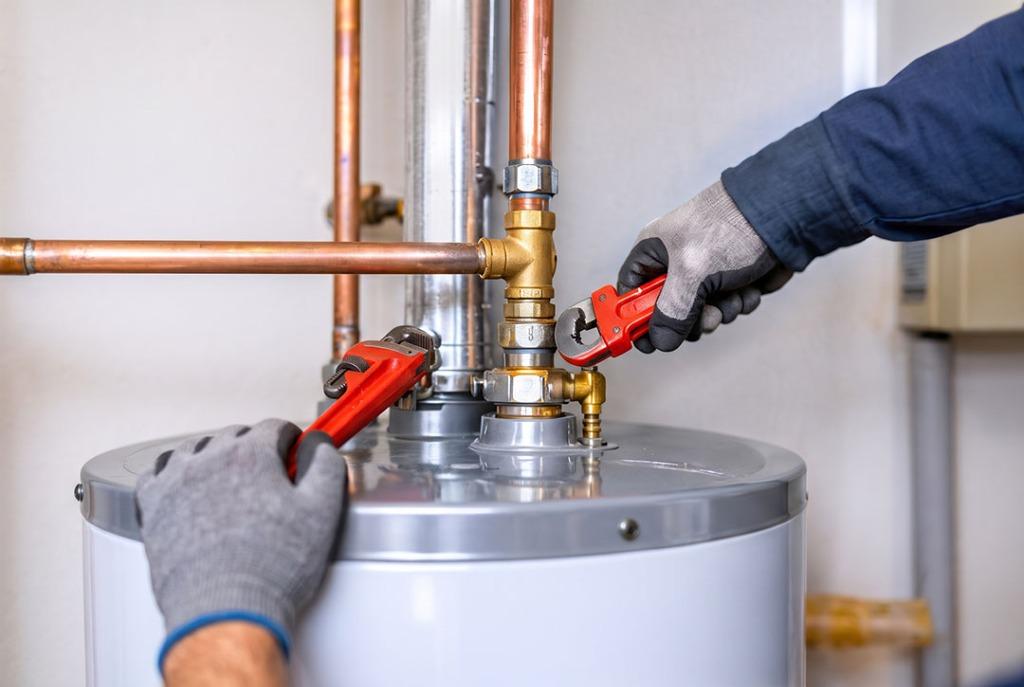
On-Site Field Testing & Diagnostic Standards
Denver plumbers verify water pressure, high-altitude gas combustion ratios, and electrical continuity before recommending part replacements. If you suspect your water heater is failing, call for an immediate on-site inspection.