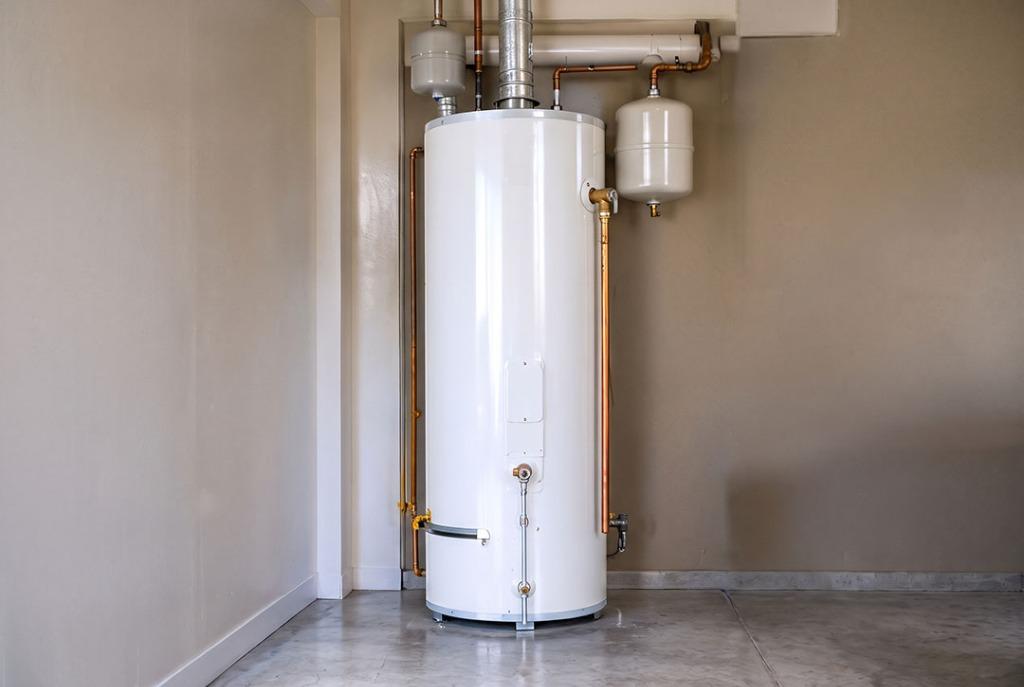
The Anode Rod Guide: How a $30 Component Saves a $2,000 Water Heater
Inside every standard storage water heater hanging out in Denver basements, a silent, microscopic battle takes place 24 hours a day. Hot water under pressure is naturally corrosive. It aggressively attacks steel, seeking out microscopic imperfections in the porcelain enamel glass lining to oxidize and eat through the tank wall.
The only thing standing between your water heater and a catastrophic flood is a single, inexpensive metal rod suspended from the top of the tank: the **sacrificial anode rod**.
Yet over 90% of Colorado homeowners have never inspected or replaced their anode rod. In this guide, we explain how cathodic protection works, the signs of a depleted rod, and how spending $30 to $50 on an anode rod every few years can double the lifespan of your water heater.
How Galvanic Cathodic Protection Works
To understand the anode rod, you must understand **galvanic corrosion**. When two dissimilar metals are immersed in an electrolyte (such as mineral-rich water), a natural electrical potential difference creates an electrical current.
In the galvanic series of metals, certain metals give up electrons more readily than others: - **Magnesium**: Highly active / electronegative (-2.37V) - **Aluminum**: Active (-1.66V) - **Zinc**: Active (-0.76V) - **Carbon Steel (Your Tank)**: Moderately active (-0.44V) - **Copper**: Inactive / cathodic (+0.34V)
Because magnesium and aluminum are significantly more chemically active than steel, electrons naturally flow *from* the anode rod *to* the steel tank.
In simple terms: **The water corrodes the sacrificial anode rod instead of your tank.** The rod willingly sacrifices itself over 3 to 6 years, dissolving away to keep the steel tank completely rust-free.
What Happens When the Anode Rod Is Depleted?
Once the anode rod dissolves down to its bare internal steel wire core, cathodic protection ends.
From that moment forward, the corrosive Front Range water begins attacking the interior steel shell of your water heater. Within 12 to 24 months after the anode rod is exhausted, rust eats through the glass lining, pinhole leaks appear, and the entire unit must be replaced.
Anode Rod Material Options: Which Is Best for Denver?
1. Magnesium Anode Rods (Recommended for Most Homes) - **Pros**: Highest electrochemical protective voltage. Ideal for Denver's municipal water supply (moderately hard, pH 7.4–8.2). Provides the cleanest, fastest protection against tank rust. - **Cons**: Can react with trace sulfate bacteria in well water, creating a harmless but unpleasant "rotten egg" hydrogen sulfide smell.
2. Aluminum / Zinc Alloy Rods - **Pros**: Contains trace zinc (approx. 10%) which neutralizes sulfur odors caused by sulfate-reducing bacteria. Ideal for mountain foothills homes or properties on private well water. - **Cons**: Slightly lower electrochemical potential than pure magnesium.
3. Powered Titanium Anode Rods (The Permanent Solution) - **Pros**: Non-sacrificial titanium rod powered by a low-voltage electrical wall plug. Never dissolves, eliminates sulfur odor completely, and lasts for the lifetime of the tank. - **Cons**: Higher initial cost ($150–$250 part).
How Often Should You Check Your Anode Rod?
- **First Inspection**: Year 3 after initial installation.
- **Subsequent Checks**: Every 1 to 2 years thereafter.
- **Replacement Trigger**: If more than 6 inches of the core steel wire is visible, or if the rod has thinned to less than 1/2 inch in diameter, replace it immediately.
Why Anode Rod Replacement Is Best Left to Professionals
While the concept of an anode rod is simple, removing one from an existing water heater can be notoriously difficult: 1. **Extreme Factory Torque**: Manufacturers torque anode rods to over 150 foot-pounds at the factory. Loosening one often requires a 1-1/16-inch socket, a 24-inch breaker bar, or an impact wrench. 2. **Cramped Ceiling Clearance**: In many Denver basements, the ceiling joists are only 12 to 18 inches above the top of the water heater. A solid 44-inch anode rod cannot be pulled out straight without bending it or utilizing a segmented flexible "sausage" anode rod. 3. **Risk of Shearing Fittings**: Torquing a stuck anode without counter-holding the tank can twist and snap internal copper water pipes.
A licensed plumber can inspect, remove, and replace your anode rod during an annual [Water Heater Maintenance](/water-heater-maintenance-denver/) tune-up in under 30 minutes.
Step-by-Step DIY Anode Rod Inspection Checklist
For homeowners comfortable with mechanical maintenance, inspecting your water heater's sacrificial anode rod can be performed following these steps:
- **Safety First**: Disconnect electric power at your home's breaker panel or rotate your gas control dial to "OFF".
- **Relieve Tank Pressure**: Turn off the cold water supply valve on top of the tank. Hook up a drain hose to the bottom drain valve and discharge 2 to 3 gallons of water to lower the water level below the tank head.
- **Locate the Hex Head**: The anode rod is integrated into the top of the tank, capped by a large 1-1/16-inch hex bolt. On some models, it is hidden beneath a circular plastic plug in the top sheet metal.
- **Break the Thread Seal**: Fit a 1-1/16-inch deep 6-point socket onto the hex bolt. Attach a 24-inch breaker bar. Apply steady counterclockwise torque. Have a helper hold the tank steady to avoid twisting copper plumbing joints.
- **Withdraw and Inspect the Rod**: Carefully lift the 44-inch metal rod straight out. If your basement ceiling is low, bend the rod gently as it emerges or consider replacing it with a multi-section segmented flexible rod.
- **Evaluate Condition**:
- - **Good**: Rod is coated in rough gray calcium oxidation but retains its 3/4-inch diameter throughout.
- - **Replace Immediately**: The rod is pitted, gouged, and the central thin steel wire core is visible across more than 6 inches of its length.
- **Thread Seal and Retorque**: Wrap the threads of the new anode rod with 4 to 5 turns of Teflon tape (PTFE). Lower it into the tank, hand-thread to prevent cross-threading, and tighten firmly with your socket wrench. Turn the water supply back on and check for weeping leaks.
The Sulfur / Rotten Egg Odor Mystery Solved
One of the most perplexing homeowner calls in Colorado involves hot water that smells violently of rotten eggs (hydrogen sulfide gas), while cold water smells completely fresh.
This odor is not caused by sewage; it is a biochemical reaction between naturally occurring, harmless sulfate-reducing bacteria in your water and standard **magnesium anode rods**. The bacteria feed on the electrons released by the dissolving magnesium, producing hydrogen sulfide gas as a byproduct.
Replacing the factory magnesium rod with an **Aluminum-Zinc alloy anode rod** completely halts this bacterial reaction, eliminating sulfur odors within 48 hours without compromising tank rust protection.
Protect Your Investment Today
Replacing a sacrificial anode rod every 4 to 5 years is the single cheapest insurance policy in all of home maintenance. If your water heater is over 3 years old and has never had its anode checked, call Denver's licensed network at **(456) 789-0123** to schedule an annual maintenance inspection.
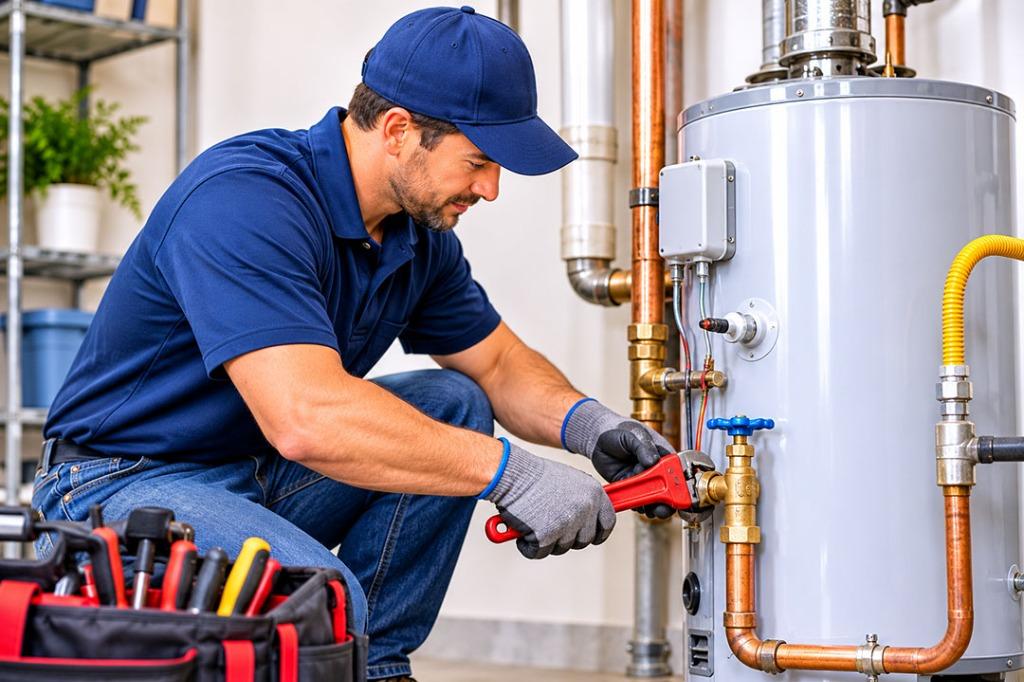
On-Site Field Testing & Diagnostic Standards
Denver plumbers verify water pressure, high-altitude gas combustion ratios, and electrical continuity before recommending part replacements. If you suspect your water heater is failing, call for an immediate on-site inspection.