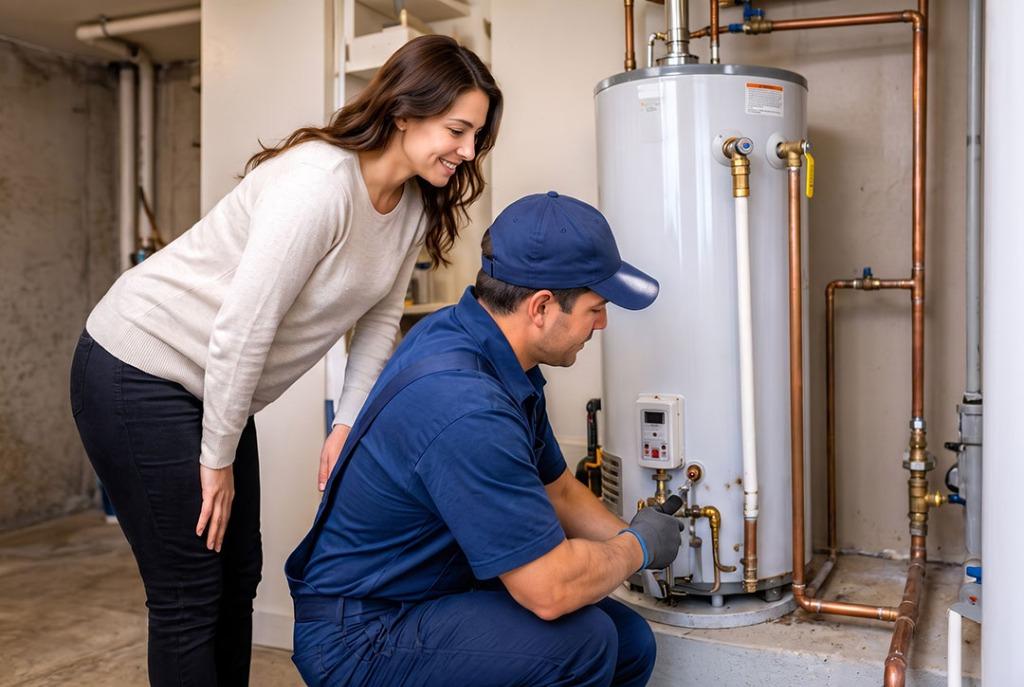
When to Repair vs. Replace an Aging Water Heater in Colorado
When a water heater stops making hot water, homeowners inevitably face a financial dilemma: *Is it smarter to spend a few hundred dollars repairing the existing unit, or bite the bullet and invest in a brand new replacement?*
Making the wrong decision can be costly. Sinking $500 into a new gas control valve on a 12-year-old water heater only to have the tank rust through and flood your basement three months later is a devastating waste of money. Conversely, replacing an entire 4-year-old water heater when a simple $150 thermocouple or heating element would fix the issue is equally wasteful.
To help Denver metro homeowners make confident, economical decisions, our licensed plumbing network uses clear, proven diagnostic guidelines. Here is the exact decision framework we recommend.
The Industry Gold Standard: The "50% Rule"
In professional plumbing, the **50% Rule** provides a clear threshold:
> *If the cost of a repair exceeds **50% of the cost of a new replacement**, AND the water heater is past **halfway through its expected lifespan**, replacement is almost always the financially superior choice.*
$$ ext{Repair Threshold} = rac{ ext{Repair Quote}}{ ext{New Installed Replacement Cost}} > 50% quad ext{AND} quad ext{Age} > 6 ext{ Years}$$
An Example Scenario: Suppose your gas water heater is 9 years old and needs a replacement electronic gas control valve and burner assembly costing $650 parts and labor. A brand new replacement installed with city permits costs $1,800. - Repair cost is 36% of replacement. - However, the tank is 9 years old (past its 8–10 year design life). - In this scenario, investing $650 into a tank that could leak at any moment is high-risk; replacement is recommended.
Decision Matrix by Age of Equipment
Category 1: 0 to 6 Years Old (Prime Operating Window) Water heaters in this age bracket are well within their operational design life and often covered under manufacturer parts warranties (standard tanks carry 6-year tank and parts warranties). - **Recommendation**: **REPAIR**. - Replacing a failed thermocouple, heating element, high-limit thermostat, or drain valve makes complete financial sense.
Category 2: 7 to 9 Years Old (The Evaluation Window) In Denver's mineral water, tanks in this age range have accumulated some sediment and their sacrificial anode rods are likely depleted. - **Recommendation**: **EVALUATE**. - If the repair is minor (under $300 for an element, pilot assembly, or wiring repair), proceed with repair. - If the repair requires expensive proprietary control boards or gas valves ($600+), consider planned replacement before an emergency occurs.
Category 3: 10+ Years Old (The Danger Window) Water heaters past 10 years old have reached the end of their design lifespan. Internal porcelain glass linings are brittle, bottom steel heads are thermally fatigued, and sediment accumulation is severe. - **Recommendation**: **REPLACE**. - Almost all repair investments on a 10+ year old tank are wasted. The risk of sudden tank rupture and basement flooding far outweighs the short-term savings of a temporary repair.
Clear Situations Where Replacement Is Mandatory
Regardless of age, there are two failure modes where repair is physically impossible:
- **Active Leaks From the Tank Vessel Body**: Water weeping through the outer metal jacket, leaking from the bottom seam, or rusted through the cylinder cannot be patched, welded, or glued. Plumbing codes and physics dictate that a leaking tank must be replaced immediately.
- **Severe Corrosion at Pipe Connections**: When dielectric nipples have completely corroded into the tank head threads, attempting to back them out will tear the tank metal.
Efficiency Payback: Upgrading to Modern Standards
When calculating the economics of replacement, don't overlook monthly utility savings. In 2015, the Department of Energy enacted National Appliance Energy Conservation Act (NAECA) standards, requiring higher insulation and efficiency across all water heaters:
- Modern storage tanks use advanced polyurethane foam insulation, cutting standby heat loss by up to 25%.
- Upgrading to a **Tankless Water Heater** (0.95 UEF) cuts natural gas usage by 24% to 34%, saving $150 to $300 annually.
- Upgrading from standard electric resistance to a **Hybrid Heat Pump Water Heater** slashes electrical consumption by up to 70%, saving $350+ every year.
Over an expected 15 to 20-year tankless lifespan, those utility savings easily offset the initial installation cost difference.
Cost Comparison Breakdown
| Service Scenario | Typical Investment | Expected Lifespan Added |
|---|---|---|
| Minor Repair (Thermocouple / Element) | $150 – $350 | 1 – 5 Years (if tank is healthy) |
| Major Repair (Gas Control Valve / Board) | $450 – $800 | 1 – 3 Years (risky on old tanks) |
| Standard Like-for-Like Tank Replacement | $1,400 – $2,800 | 10 – 14 Years |
| High-Efficiency Tankless Conversion | $3,500 – $6,200 | 20 – 25 Years |
Real-World Denver Case Studies: Repair vs. Replace
To understand how this economic framework applies in real life, consider two recent service calls from our Denver metro plumbing network:
Case Study A: The 5-Year-Old Electric Tank in Lakewood - **Home**: A 1970s townhome in Lakewood with an electric 50-gallon water heater installed in 2021. - **Problem**: Homeowner had lukewarm water that turned freezing after 3 minutes. - **Diagnosis**: Testing with a digital multimeter revealed an open circuit (burnt resistance wire) on the lower 4500W element, while the upper element and dual thermostats tested perfectly. The steel tank and anode rod were in excellent shape. - **Outcome**: The plumber replaced the lower element and flushed the minor sediment bed for $220. The heater was returned to full peak capacity, saving the homeowner over $1,500 compared to an unneeded replacement.
Case Study B: The 11-Year-Old Atmospheric Gas Tank in Aurora - **Home**: A two-story single-family home in Aurora with a 50-gallon gas heater installed in 2015. - **Problem**: Gas control valve was failing, shutting off the burner intermittently, with rust visible on the tank nipple threads. - **Diagnosis**: A replacement smart gas control valve would have cost $580. However, visual inspection revealed flaking rust along the bottom seam of the tank and heavy calcium sediment buildup. - **Outcome**: The plumber recommended against investing $580 into an 11-year-old tank. The homeowner opted for a modern, high-recovery replacement. With a $400 local utility rebate, the net upgrade cost provided 12+ years of guaranteed reliability and zero flood anxiety.
What Callers Should Prepare When Asking for Quotes
To get an accurate, upfront estimate over the phone, have the following details ready: 1. **Manufacturer Name and Serial Number** from the rating plate. 2. **Current Fuel Type**: Natural Gas, Propane, or Electric 240V. 3. **Current Tank Capacity**: 40, 50, or 75 gallons. 4. **Current Symptoms**: Total loss of heat, lukewarm water, strange noises, or active water on floor.
For honest, upfront guidance without sales pressure, call Denver's trusted network at **(456) 789-0123**.
On-Site Field Testing & Diagnostic Standards
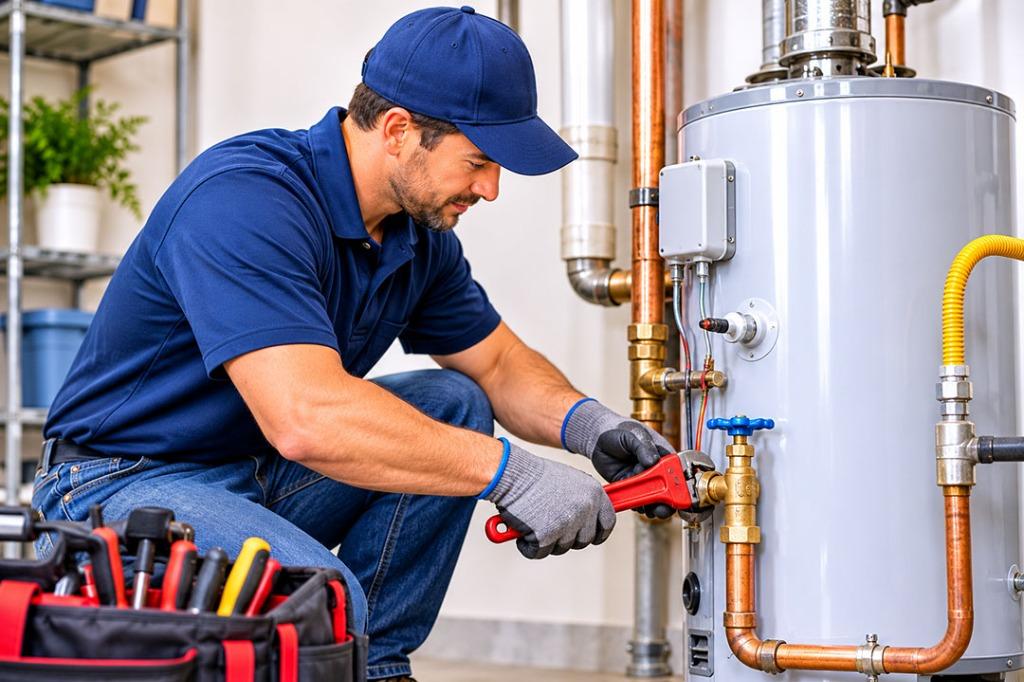
Denver plumbers verify water pressure, high-altitude gas combustion ratios, and electrical continuity before recommending part replacements. If you suspect your water heater is failing, call for an immediate on-site inspection.