Electric Water Heater Troubleshooting: DIY Steps vs. When to Call a Pro
Electric storage water heaters are widely favored throughout Colorado for their mechanical simplicity, whisper-quiet operation, and complete freedom from natural gas venting flues or carbon monoxide hazards. They are standard fixtures in multi-family condos, modern townhomes, and rural Front Range properties outside municipal natural gas utility networks.
However, when an electric water heater acts up, the failure mode is almost always sudden and jarring: you turn on the shower tap and receive pure ice-cold water.
Because electric water heaters operate on dedicated high-voltage 240-volt electrical circuits drawing up to 30 amperes, troubleshooting them involves significant safety hazards. In this guide, our network of licensed Colorado master plumbers breaks down how electric water heating circuits work, safe DIY diagnostic checks you can perform in 5 minutes, and the exact symptoms that require a licensed professional.
How an Electric Storage Water Heater Operates
Unlike gas units that heat from a single burner at the bottom of the tank, modern residential electric water heaters utilize **two independent electric heating elements** controlled by a synchronized pair of thermostats:
- **The Upper Thermostat & Element**: When cold water fills the tank, the upper thermostat has priority. It energizes the upper 4500-watt heating element until the top third of the tank achieves 120°F.
- **The Power Transfer**: Once the upper water reaches temperature, the upper thermostat flips power down to the lower thermostat.
- **The Lower Thermostat & Element**: The lower element energizes to heat the remaining bottom two-thirds of the tank. In normal operation, both elements *never* fire simultaneously; they alternate to avoid overloading your home's 30-amp electrical breaker.
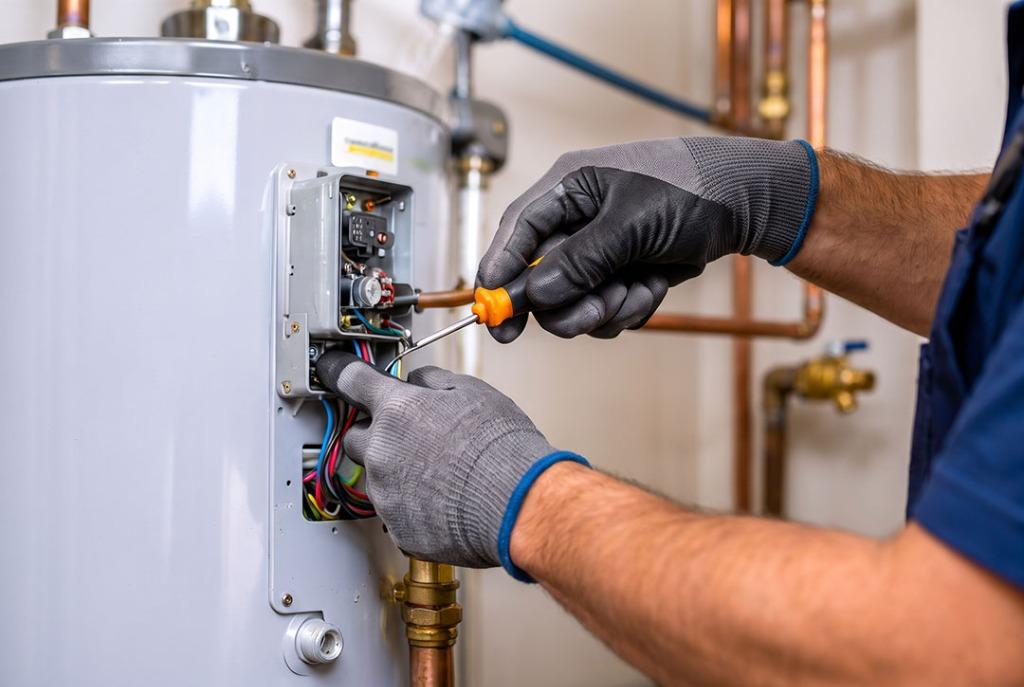
- **The High-Limit Reset Switch (ECO)**: Located on the upper thermostat, this red push-button Emergency Cut-Off automatically trips if water temperatures inside the tank exceed 170°F, preventing boiling steam explosions.
Safe DIY Troubleshooting Steps for Homeowners
Before calling a plumber, there are three safe, non-invasive checks you can perform without touching any live electrical wiring:
1. Check Your Main Electrical Service Panel Water heaters run on high continuous loads. A sudden voltage surge or localized overheating can trip the circuit breaker. - Locate your home's breaker panel. - Find the double-pole 240V breaker labeled "Water Heater" (normally two joined 30-amp switches). - If the switch is in the center "tripped" position or fully "OFF", firmly flip it completely to OFF, then firmly flip it to **ON**. - If the breaker instantly snaps back to tripped with a loud spark, **do not force it**. You have a dead short in an element or wiring that requires professional repair.
2. Inspect for Signs of External Water Leaks Water and high voltage are an extremely dangerous combination. Inspect the outer jacket of the tank: - Check around the base pan for standing water. - Check the two rectangular metal access panels on the side of the tank. If you see water dripping from behind these panels, water is leaking through the heating element gasket directly onto 240V electrical terminals. **Turn off the circuit breaker immediately.**
3. The One-Time High-Limit Red Button Reset - **Step 1**: Turn off the water heater circuit breaker at the main electrical panel. - **Step 2**: Remove the upper metal access panel cover using a screwdriver. Fold back the fiberglass insulation to reveal the plastic protective cover. - **Step 3**: Locate the red button marked "RESET" on the upper thermostat. - **Step 4**: Press the red button firmly with your thumb. If you hear a distinct metallic "click," the high-limit switch had tripped. - **Step 5**: Replace the insulation and screw the metal cover back on securely. Turn the breaker back on. - **Warning**: If the reset button trips again within 24 hours, **stop resetting it**. A runaway thermostat or grounded element is dangerously overheating your tank.
When to Call a Licensed Professional
If simple breaker and reset checks fail to restore hot water, further troubleshooting requires a digital multimeter to test continuity and resistance across 240V terminals—a task that carries severe shock risks and is best handled by a licensed professional.
Call Denver dispatch at **(456) 789-0123** if you observe any of the following:
1. Water Is Lukewarm or Runs Out in Two Minutes This is the textbook symptom of a burned-out **lower heating element**. Because the upper element functions, you get a quick burst of hot water that depletes almost instantly. A plumber drains the tank partially, unscrews the element with a specialized 1-1/2-inch hex socket, and threads in a brand new heavy-duty element.
2. Circuit Breaker Trips Continuously When the copper sheath of an electric element corrodes and cracks open, water contacts the energized resistance wire inside. This creates a direct ground fault that trips the breaker instantly. Testing with a multimeter easily identifies which element has shorted to ground.
3. Burnt Plastic or Electrical Odor Loose wire nuts or loose screw terminals create high electrical resistance, generating enough localized heat to melt wire insulation and scorch thermostat mounting brackets. A plumber cuts back damaged copper conductors, replaces burned terminals, and verifies safe wire gauge sizing.
4. Severe Calcium Sediment Submersion In Denver and suburbs like [Lakewood](/service-areas/lakewood/) and [Centennial](/service-areas/centennial/), mineral sediment settles onto the bottom of the tank, burying the lower heating element in lime crust. The element overheats and burns out repeatedly until a thorough [Water Heater Flushing](/water-heater-flushing-denver/) clears the sediment bed.
Electric Water Heater Component Replacement Costs
| Replacement Component | Complexity | Typical Professional Investment |
|---|---|---|
| Upper or Lower Heating Element | Moderate (Draining required) | $150 – $280 |
| Upper or Lower Thermostat | Moderate | $140 – $240 |
| Both Elements & Dual Thermostats (Complete Rebuild) | Moderate | $280 – $420 |
| High-Limit Reset Switch Assembly | Moderate | $150 – $250 |
| Full Turnkey Electric Tank Replacement (50 Gallon) | High (Permits & Disposal) | $1,400 – $2,400 |
Extending the Life of Your Electric Water Heater
- **Install High-Density Incoloy / Stainless Steel Elements**: When replacing burned elements, request heavy-duty Incoloy elements. They resist mineral scaling and outlast standard copper elements by years.
- **Schedule Annual Tank Draining**: Flushing loose sediment once a year keeps the lower element immersed in clear water rather than sand.
- **Check the Sacrificial Anode Rod**: Electric water heater steel tanks can easily last 15+ years if the anode rod is replaced every 4 to 5 years.
For fast, same-day diagnosis and repair of your electric water heater anywhere in the Denver metro area, call **(456) 789-0123** today.
On-Site Field Testing & Diagnostic Standards
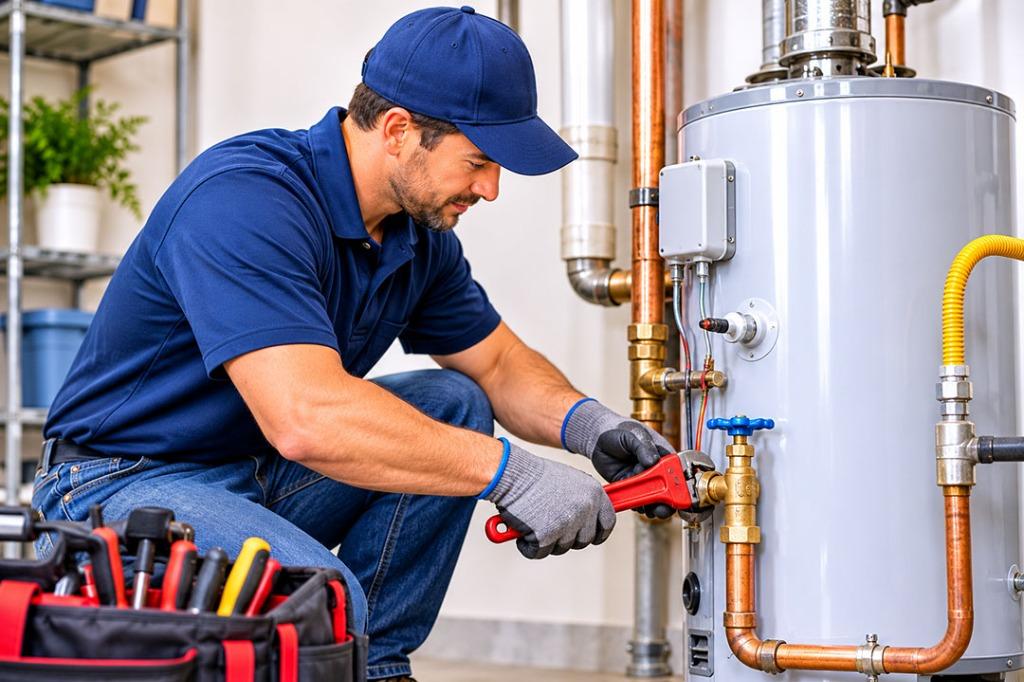
Denver plumbers verify water pressure, high-altitude gas combustion ratios, and electrical continuity before recommending part replacements. If you suspect your water heater is failing, call for an immediate on-site inspection.